Instant Gratification, Instant Regret: How Fast Shipping Rewired Your Shopping Brain
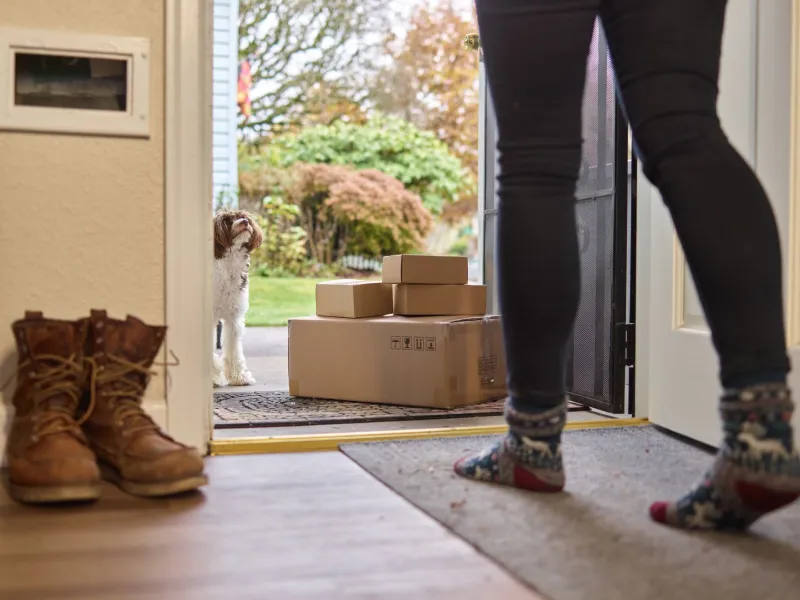
There's a specific kind of excitement that hits when you get that "Your order is on its way" notification. Your pulse ticks up slightly. You check the tracking link more than once before noon. By the time the package lands on your doorstep, you've already half-forgotten why you ordered it in the first place — but it doesn't matter, because the thrill of the arrival is its own reward.
That feeling has a name. Researchers call it anticipatory dopamine release, and retailers have spent the last decade engineering their entire logistics infrastructure around it. The faster they can close the gap between "add to cart" and "delivered to door," the more powerful that chemical hit becomes — and the less time your rational brain has to intervene.
Here's the uncomfortable truth: the thing that used to feel like an inconvenience was actually protecting you.
The Waiting Period We Didn't Know We Needed
Before two-day shipping became standard — before same-day delivery turned into a selling point — buying something online meant waiting a week or two. That delay wasn't just logistical friction. It was psychological breathing room.
Behavioral economists have a concept called the "cooling-off effect." When there's a meaningful gap between deciding to buy something and actually receiving it, buyers tend to revisit the decision. Sometimes they cancel the order. Sometimes they forget about it entirely. And sometimes, they genuinely still want the item when it arrives and feel good about the purchase.
That last outcome is actually the healthy one. The problem is that fast shipping has collapsed that window almost entirely. When a package can show up in three hours, there's no decision to revisit. The impulse and the reward are nearly simultaneous, which means your brain never gets the chance to ask: do I actually want this, or did I just want to feel something for a minute?
Urgency That Isn't Real
Fast shipping doesn't just shorten the wait — it manufactures pressure. When a product page tells you that ordering in the next 47 minutes qualifies you for same-day delivery, that countdown isn't informational. It's a trigger.
Neuroscience research on scarcity and urgency shows that artificial time pressure activates the same threat-response pathways as actual emergencies. Your brain briefly enters a mild fight-or-flight state. In that mode, long-term thinking takes a back seat. You stop weighing cost versus value. You stop asking whether you already own something similar. You just act.
Retailers know this. The countdown timers, the "only 3 left in stock" banners, the same-day cutoff windows — all of it is designed to keep you from slowing down. Because the moment you slow down, you might change your mind.
The Regret Data Is Right There in the Returns
If you want a real-world measure of how fast shipping affects purchase quality, look at return rates. The National Retail Federation has consistently reported that online return rates hover around 17 to 20 percent of total purchases — and in categories like apparel, that number climbs significantly higher. During peak shipping seasons, when same-day and next-day options are most heavily promoted, return volumes spike accordingly.
That's not a coincidence. It's a pattern. When people have less time to reflect, they make worse decisions. They buy the wrong size because they didn't check the chart. They order a color that looked different on screen. They purchase something they already owned a version of, buried somewhere in a closet.
The product isn't always the problem. The process is.
What Friction Was Actually Doing for You
It sounds strange to say that inconvenience is useful. But friction in a purchasing decision — having to wait, having to plan ahead, having to consider whether something is worth the delay — functions as a built-in filter. It separates the things you actually want from the things you just reached for in a distracted moment.
Think about the last time you drove to a physical store to buy something specific. You probably thought about it before you went. You probably confirmed it was worth the trip. That mental rehearsal is a form of pre-commitment — a small act of intentionality that tends to produce better outcomes than a 2 a.m. impulse click.
Fast shipping eliminated that filter without replacing it with anything. And now the average American household is managing a revolving door of packages, returns, and low-grade buyer's remorse.
How to Build Your Own Delay
The good news is that you don't have to opt out of modern convenience entirely. You just have to reintroduce a little friction on your own terms.
Use your cart as a waiting room. Instead of checking out immediately, leave items in your cart for 24 to 48 hours. This is the simplest and most effective habit shift you can make. A surprising number of things you almost bought will feel completely unnecessary by the next morning.
Ignore the countdown. When you see a same-day delivery cutoff timer, consciously treat it as irrelevant. Ask yourself: if I have to wait until tomorrow, do I still want this? If the answer is no, that's your answer.
Make a list before you shop. Going in with a specific intention — even a loose one — dramatically reduces impulse additions. You're shopping with purpose instead of browsing for stimulation.
Track what you actually use. Spend one month noting which recent purchases you've genuinely used or worn versus what's sitting untouched. The data tends to be clarifying in a way that abstract budgeting advice isn't.
The Smarter Way to Shop Fast
None of this means fast shipping is inherently bad. When you know exactly what you need — a replacement item, a specific size you've ordered before, something you've researched thoroughly — two-day delivery is a genuine convenience. The technology isn't the problem. The problem is using it before your brain has finished deciding.
At Leme Shop, the goal has always been to make shopping feel good in a lasting way — not just for the thirty seconds after you click "place order." Style delivered and life elevated means something beyond the thrill of the unboxing. It means owning things that actually fit your life, your space, and your intentions.
The dopamine hit from a fast delivery is real. But the satisfaction of a purchase you're still happy about six months later? That one's worth waiting for.