What Nobody Sees Is Running the Show: The Hidden Layer of Style Confidence
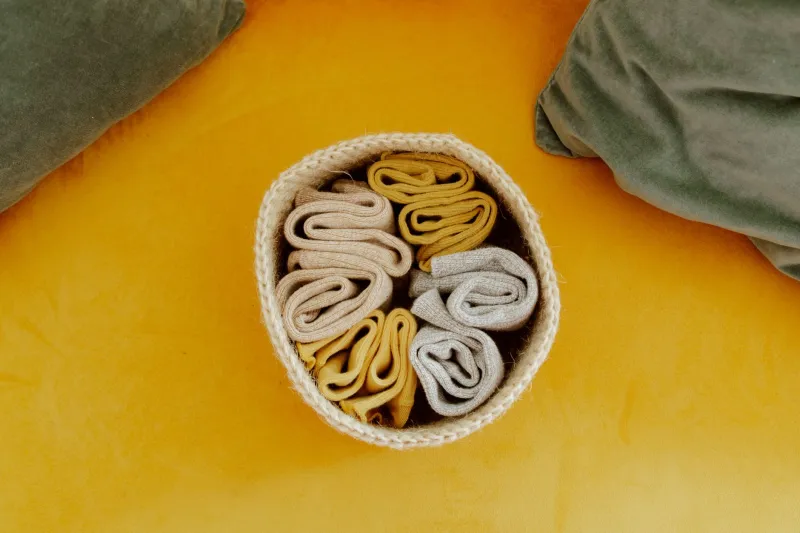
Here's a weird little experiment. Open your underwear drawer right now. Not to grab something — just to look. What do you see?
If the answer involves a sad tangle of mismatched socks, at least two pairs of boxers that have been "almost thrown away" for six months, and undershirts that have graduated to a shade best described as "vintage beige," you're not alone. Most people treat this category like a blind spot in their wardrobe — out of sight, out of mind. But the thing is, your basics aren't actually out of mind. They're running the whole operation from behind the scenes.
Style confidence doesn't start with the jacket. It starts with what's underneath it.
The Psychology of the Layer Nobody Sees
There's a reason therapists and performance coaches talk about "enclothed cognition" — the documented phenomenon where what we wear actually changes how we think and behave. Most people apply this idea to visible clothing: the power blazer, the sharp shoes, the outfit that just works. But the effect doesn't stop at the outer layer.
When you're wearing underwear that fits well, socks that don't slide down your heel every twenty steps, and an undershirt that isn't pulling or bunching, your body is physically at ease. And when your body is at ease, your brain stops micromanaging small discomforts and frees up bandwidth for everything else — the meeting, the date, the errand run where you inevitably run into someone you haven't seen in years.
On the flip side, scratchy waistbands, bra straps that dig in, and undershirts that show through a dress shirt create a low-grade, constant distraction. You shift, you adjust, you're aware of your body in an uncomfortable way. That awareness leaks into how you hold yourself. And how you hold yourself is your style, whether you intended it or not.
Why We Neglect the Foundation
Basics are boring to buy. There's no dopamine hit in a three-pack of crew socks the way there is in a new pair of sneakers. You can't post your new undershirts on social media. Nobody compliments your waistband. The reward cycle that drives most shopping decisions just doesn't kick in here.
So we defer. We keep the old stuff until it's genuinely falling apart, and even then we find ourselves grabbing it from the drawer because "it'll do for today." The problem is that "today" adds up. You're wearing the worn-out stuff most of the time, which means the worn-out stuff is setting your baseline.
There's also a weird guilt thing that happens around spending money on things people won't see. It can feel indulgent or even irrational to invest in quality basics when you could put that money toward something visible. But that logic is exactly backward. The visible stuff sits on top of the foundation. If the foundation is uncomfortable, ill-fitting, or falling apart, it undermines everything stacked on top of it.
The Audit: What Your Drawer Is Actually Telling You
Doing a real basics audit is simpler than it sounds, and it's genuinely illuminating. Pull everything out. Every sock, every pair of underwear, every undershirt or bralette or tank. Lay it all out and ask three questions about each item:
Does it fit? Not "fit technically" — does it actually fit the body you have right now? Waistbands should sit without digging. Cups should contain without gaps. Socks should reach where they're supposed to reach and stay there.
Is it intact? Stretched elastic, thinning fabric, pilling that's gone past "character" into "texture" — these are signs that something has served its time. There's no shame in it. It just means the item is done.
Does it feel good? This one gets overlooked constantly. Your basics should feel neutral at worst, comfortable at best. If you put something on and immediately notice it — not in a good way — that's a problem.
Anything that fails two or more of those questions gets retired. Yes, even if it "still works." Working and working well are different things.
Upgrading Without Going Overboard
Here's the good news: you don't need to overhaul everything at once, and you definitely don't need to spend a fortune. The basics category has genuinely good options at a range of price points, and the goal isn't to buy the most expensive version of everything — it's to buy things that actually fit and hold up.
A few principles that make the upgrade process smarter:
Replace by category, not all at once. Start with whatever is most depleted. If your socks are the disaster zone, fix socks first. Spreading the investment out over a few months makes it manageable without feeling like a big hit.
Prioritize fit over brand. The most premium underwear brand in the world won't help you if the cut doesn't work for your body. Read size guides carefully, especially when buying online. A lot of basics retailers now offer detailed measurements and body type guidance — use it.
Think about what you wear most. If you're in a bra every day, that's where quality matters most. If you live in athletic socks, upgrade those before your dress socks. Match your investment to your actual lifestyle, not an idealized version of it.
Buy in small quantities to test. Before committing to a six-pack of anything, try one or two. Fabric feel, fit, and durability are hard to judge from a product page. Give yourself a trial run.
The Confidence Payoff Is Real
It sounds like a lot to put on a sock or a pair of underwear. But the payoff is genuinely disproportionate to the investment. When your foundation layer is sorted — when everything fits, nothing pulls, and you're not thinking about your clothing at all — you move differently. You stand a little taller. You're more present in your own body instead of fighting with it.
That ease translates outward. It shows up in how you carry yourself, how you engage in conversations, how you walk into a room. None of that has anything to do with what you're wearing on top. It's all coming from the layer nobody sees.
So the next time you're thinking about refreshing your style, skip the new statement piece for a minute. Open that drawer first. What you find in there will tell you more about where to start than any outfit formula ever could.