Stop Deciding What to Wear: The Case for Dressing Like You've Already Won
Somewhere in your morning routine, buried between the alarm snooze and the first cup of coffee, there's a small but surprisingly costly decision happening. You're standing in front of your closet — maybe for two minutes, maybe for fifteen — trying to figure out what to wear. It feels trivial. It isn't.
That daily ritual of choosing an outfit is burning mental fuel you didn't know you were spending. And a growing number of people — from Silicon Valley founders to working artists to everyday professionals — have quietly decided to stop paying that tax altogether.
They wear the same thing. Over and over. On purpose.
The Science Behind the Wardrobe Shortcut
Psychologists have a term for what happens when you make too many choices in a row: decision fatigue. The idea is straightforward — your brain has a finite capacity for good decision-making each day, and every choice you make, no matter how small, draws from that same pool.
Research from social psychologist Roy Baumeister and others has shown that people who face more decisions earlier in the day tend to make worse ones later on. Judges grant fewer paroles after lunch. Shoppers make impulsive purchases at checkout. And yes, people who spend twenty minutes agonizing over their outfit might be arriving at work already slightly depleted.
Removing that choice entirely — by defaulting to a go-to uniform — keeps that mental energy intact. It sounds almost too simple. That's probably why it works.
Who Actually Does This (And Why It's Not Just a Tech Bro Thing)
Mark Zuckerberg's gray t-shirt collection is the most referenced example, but the concept stretches far beyond Silicon Valley. Steve Jobs had his black turtleneck. Barack Obama famously told Vanity Fair he only wore gray or blue suits while in office, specifically to reduce the number of decisions he had to make before noon.
But this isn't just a billionaire habit or a productivity-podcast cliché. Artists have been doing it for decades. Many painters, writers, and designers adopt a kind of studio uniform — not because they don't care about aesthetics, but because they care about them so much that they'd rather save that creative energy for their actual work.
And increasingly, regular people across the US are embracing the same logic. Teachers, nurses, small business owners, remote workers — people who have genuinely full lives and have realized that a repeatable outfit framework is one of the quietest upgrades they can make to their day.
The Confidence Angle Nobody Talks About
Here's the part that tends to surprise people: wearing the same thing repeatedly doesn't make you look like you stopped trying. For a lot of people, it actually makes them look more put-together.
There's a psychological phenomenon sometimes called "enclothed cognition" — the idea that what you wear affects how you think and feel about yourself. When your outfit is a known quantity, something you've already established as your thing, you stop second-guessing it. You walk out the door without that low-level background hum of "is this right?" following you around all day.
That certainty reads as confidence. Other people notice it, even if they can't name what they're seeing.
Compare that to the experience of wearing something new and slightly uncertain — constantly wondering if it fits right, if the color is working, if you should have gone with the other option. That self-consciousness has a cost too.
What a Uniform Actually Looks Like in Real Life
A wardrobe uniform doesn't mean you own seven identical shirts (though some people do, and they report loving it). It means you've identified a formula that works and you stick to it.
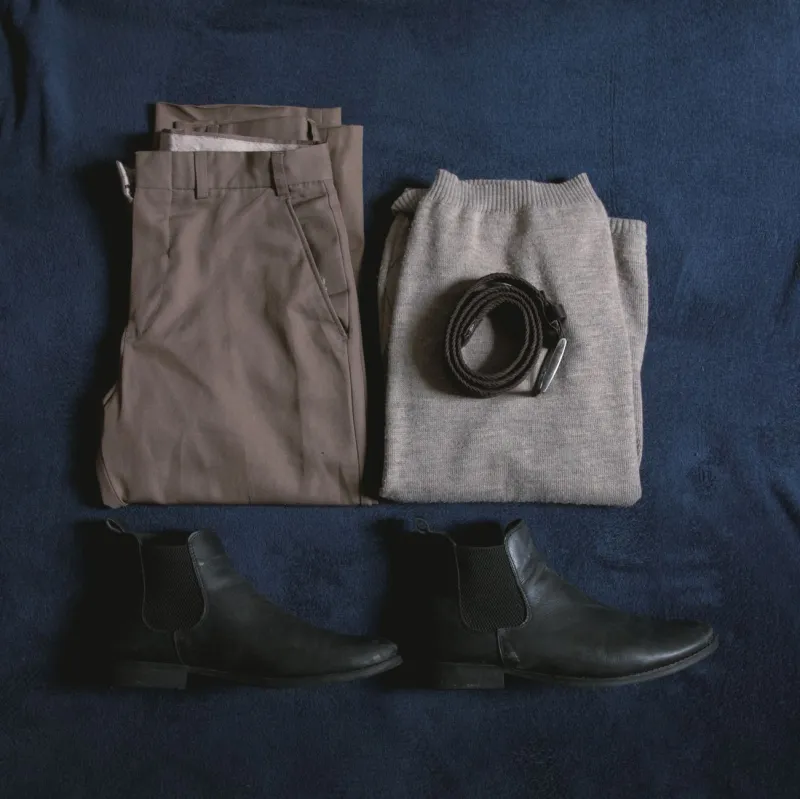
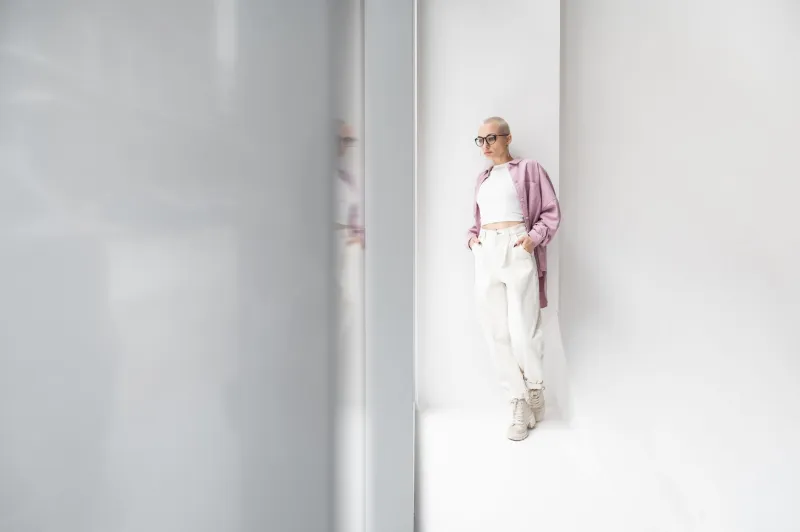
For some people, that looks like: dark jeans, a clean white or black tee, a layer on top, and one reliable pair of shoes. For others it's a specific silhouette — fitted pants, a tucked-in shirt, simple sneakers. The formula can be dressed up or down, adjusted for weather, swapped between a handful of pieces that all work together.
The key isn't monotony. It's coherence. You're building a personal aesthetic that's consistent enough that getting dressed becomes more like a ritual than a riddle.
A few practical starting points if you want to try this:
- Identify your actual lifestyle. A uniform built around what you actually do — not an aspirational version of your week — will stick. If you work from home four days out of five, build around that reality.
- Find your anchor piece. Most uniforms have one item that everything else orbits. For some people it's a specific pant fit. For others it's a jacket or a shoe. Start there.
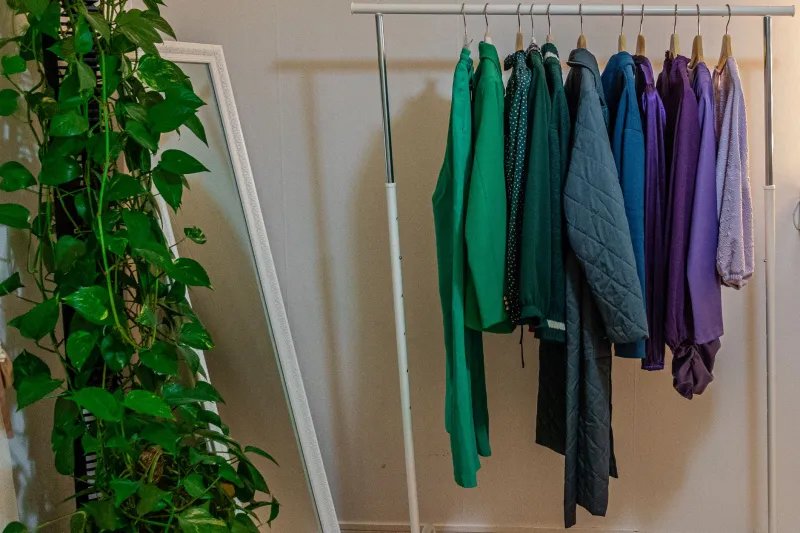
- Limit your palette. You don't have to wear all black, but keeping your colors within a tight range means everything mixes without thinking. Neutrals are the obvious play, but a personal palette of two or three colors you genuinely love works just as well.
- Buy multiples of what works. This is the move that signals you've fully committed. When you find the shirt, the pant, the shoe that fits perfectly into your formula, buy two. Maybe three. This is not wasteful — it's strategic.
The Real Benefit Isn't Time. It's Clarity.
People who adopt a clothing uniform often report the same unexpected side effect: they feel more like themselves. Not less expressive — more.
When you stop outsourcing your identity to whatever happened to be on trend this season, something interesting happens. The clothes become background and you become foreground. Your energy, your ideas, your presence in a room — those things get to take up more space.
There's also something quietly freeing about opting out of the daily performance of outfit variety. American consumer culture pushes hard on the idea that more choices equal more freedom. The uniform life pushes back on that. It says: I already know who I am. I don't need to figure it out again every morning.
That's not a small thing.
Start Small, Then Commit
You don't have to overhaul your wardrobe overnight. Start with one week. Pick a formula — any formula that feels like you — and wear some version of it every day for five workdays. Notice what happens to your mornings. Notice what happens to your headspace by 10am.
If it feels right, lean in. Refine it. Invest in better versions of the pieces that anchor it. Build the kind of closet where everything earns its place because it serves the formula.
The goal isn't to dress like a robot. It's to dress like someone who's already made up their mind — and is ready to get on with the rest of their day.