Dress Your Mood: What Science Actually Says About Color, Texture, and How Your Clothes Make You Feel
Most mornings, the clothes you grab feel like a practical decision. Something clean, something that fits, something that works. But what if that choice is doing a lot more heavy lifting than you realize? A growing body of research suggests that the colors and textures you wear aren't just visual — they're neurological. They shape your emotional state, your confidence levels, and even how productive you end up being by noon.
This isn't mysticism or marketing copy. It's psychology with a paper trail. And once you understand the basic principles, building a wardrobe that actually works for you — not just on you — starts to feel less like a luxury and more like a practical life upgrade.
The Science Has a Name (And It's Not New)
Chromotherapy — the study of how color affects human psychology and physiology — has been around in some form since ancient Egypt. But modern research has given it real academic weight. Studies published in peer-reviewed journals like Color Research & Application have documented measurable links between color exposure and emotional response. The findings aren't subtle.
Red, for example, has been shown to increase heart rate and stimulate alertness. Blue tends to lower cortisol levels and promote a sense of calm. Yellow activates the part of the brain associated with optimism and clarity. These aren't vibes — they're documented physiological responses.
The concept that's gotten a lot of attention lately is called enclothed cognition, a term coined by researchers Hajo Adam and Adam Galinsky in a 2012 study. Their work demonstrated that the symbolic meaning we attach to clothing actually influences our cognitive performance. Participants who wore a lab coat they believed belonged to a doctor performed better on attention-related tasks than those who wore the same coat but were told it was a painter's smock. Same garment. Different mindset. Different outcome.
The takeaway? What you wear doesn't just signal something to the world — it signals something to you.
Color as a Daily Tool
Once you accept that color has a psychological function, your closet starts looking less like a storage problem and more like a toolkit.
Here's a loose framework based on what the research consistently supports:
Yellow and warm oranges are associated with energy, creativity, and social openness. If you've got a brainstorming session, a first date, or a day where you need to shake off a funk, reaching for something in the warm-tone family isn't a coincidence — it's strategy.
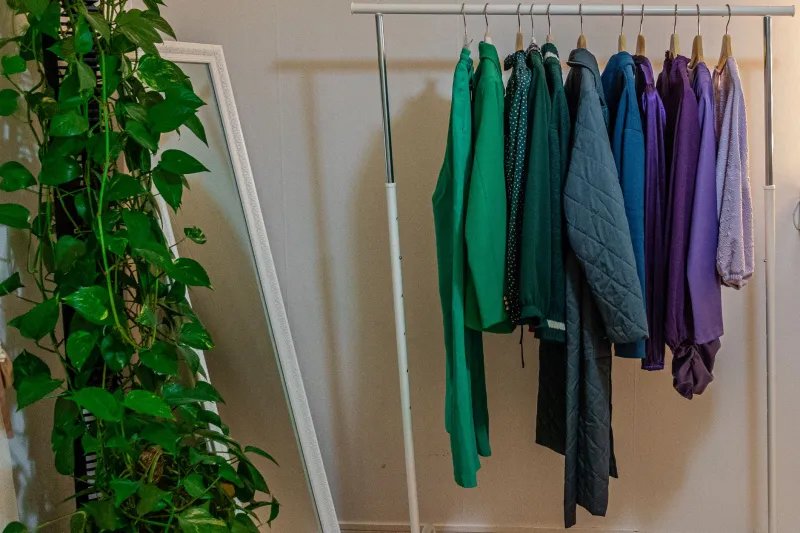
Blue and cool greens are linked to focus, trustworthiness, and reduced anxiety. Heading into a high-stakes meeting or a long work-from-home stretch? These shades tend to keep your nervous system a little more settled.
Red is complicated. It signals power and urgency, which can be great when you need to project confidence — but it can also raise your own internal stress response. Wear it intentionally, not as a default.
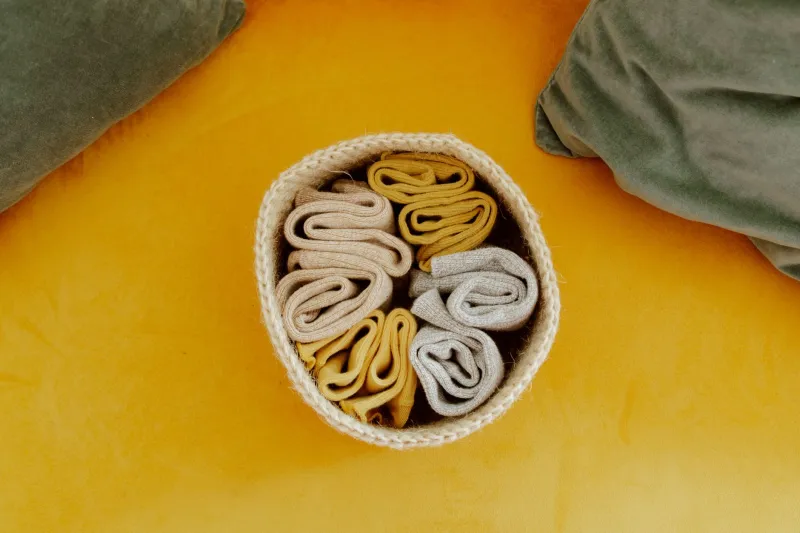
Neutrals and soft earth tones — think warm taupes, dusty mauves, muted sage — tend to produce a grounding effect. They're low-stimulation in the best way, which makes them genuinely useful on days when everything already feels like a lot.
Black is psychologically interesting because it carries both authority and emotional protection. Many people gravitate toward it when they want to feel contained or in control — which explains why it's both a wardrobe staple and an emotional default for a lot of Americans.
Texture Is the Part Most People Skip
Color gets all the attention, but tactile experience — how your clothes feel against your skin — is equally important, and arguably more immediate. Sensory input from your clothing is constant. You're not staring at your outfit all day, but you are wearing it.
Research in sensory psychology has shown that soft, smooth textures tend to reduce physiological stress markers, while rough or scratchy fabrics can keep your nervous system in a low-level state of irritation. This isn't trivial. If you've ever had a day where you couldn't quite figure out why you felt off, and it turned out your shirt collar was driving you quietly insane — you already know this intuitively.
Some practical texture principles worth building around:
- Soft knits and brushed cotton for days when you need comfort without sacrificing polish
- Structured wovens (think crisp poplin or a clean denim) when you need your clothes to help you feel organized and capable
- Velvet, bouclé, or ribbed textures when you want sensory richness — these fabrics have a grounding, almost tactile-satisfying quality that can genuinely lift your mood
- Linen and lightweight gauze for high-stress days when you need your body to feel unrestricted
The goal isn't to overthink every fabric choice. It's to become aware enough that you stop wearing things that quietly work against you.
Building a Mood-Responsive Wardrobe (Without Starting Over)
Here's the good news: applying this stuff doesn't require a total closet overhaul or a significant budget. It requires a small shift in how you think about what you're buying and why.
When you're shopping — whether you're browsing online or scrolling through a new drop — start asking a different set of questions. Not just do I like this? but what does this feel like to wear? and what kind of day is this going to help me have?
A few practical moves:
Audit your current closet by mood category. Pull out pieces that reliably make you feel good and notice what they have in common. Are they a certain color family? A specific fabric weight? That's your data.
Add one intentional color anchor. If your wardrobe is 90% neutrals and you've been feeling flat, you don't need a full color injection — just one well-chosen piece in a tone that genuinely energizes you. A rust-orange cardigan. A cobalt blue button-down. Something you'll actually reach for.
Replace scratchy with soft wherever you can. This one sounds minor but it compounds over time. Swapping out one uncomfortable staple for something that feels good against your skin is a quality-of-life upgrade that pays dividends every single day you wear it.
Stop treating texture as a trend. Bouclé isn't just having a moment — it's a genuinely satisfying tactile experience. Ribbed knits aren't just stylish — they have a compression quality that many people find calming. Buy for feel, not just for look.
The Bigger Picture
Dopamine dressing — a term that's been floating around fashion media for a couple of years now — sometimes gets reduced to "wear bright colors, feel happy." But the actual science is more nuanced and more useful than that. It's not about chasing a color trend. It's about understanding that your clothing is in constant conversation with your nervous system, and you have more say in that conversation than you probably thought.
The best wardrobe isn't the biggest one or the most expensive one. It's the one that shows up for you — that helps you feel capable on a hard Tuesday, grounded on an anxious morning, and genuinely like yourself on an ordinary afternoon.
That's the real return on investment. And it starts with paying attention.