The Cart Math Nobody Shows You: What 'Free' Shipping Really Costs

Photo: Jules Verne Times Two, CC BY-SA 4.0, via Wikimedia Commons
Your cart had one job: buy the $28 phone case you actually needed. Then a banner appears. Spend $50 and shipping is free. Suddenly you are comparing a $24 charging cable and a $19 travel mug, trying to cross a line that did not exist five minutes ago.
That is not a coupon. It is a merchandising tactic, and it works because the math feels obvious when it is not. In 2026, online checkout is designed to make the threshold feel like a reward. Your job is to make it prove itself.
The threshold is a nudge with a calculator
Free shipping minimums are usually set just above a store's average order value. If the typical cart is $43, a $50 threshold nudges shoppers to add one more thing. The retailer knows the shipping cost it is waiving — maybe $6 to $9 for a small parcel — and it also knows the margin on the extra item you toss in.
Here is the simplest version. You wanted a $28 item. Shipping costs $7. The store offers free shipping at $50. You add a $24 item you did not plan to buy. You saved $7 in shipping and spent $24 more. That is a net loss of $17, plus tax on the extra item, plus the space it takes up in your home.
The only time the threshold wins for you is when the add-on was already on your list. A replenishment you needed next week is fair. A novelty candle you met 90 seconds ago is not.
Split shipments are not a free lunch
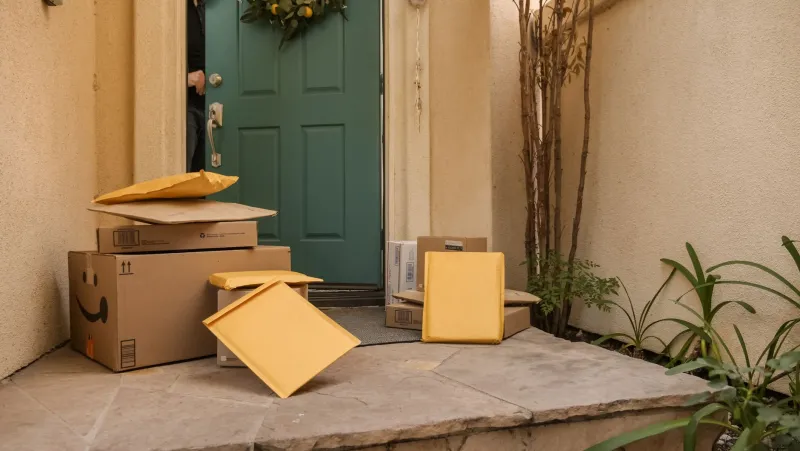
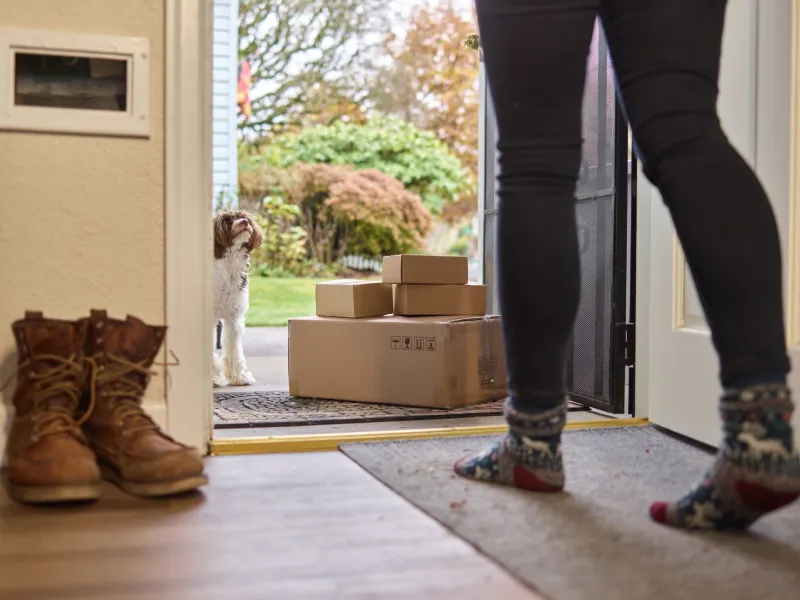
Even when the shipping label says free, the parcel still moves. It gets picked, packed, sorted, flown or trucked, and delivered. Some orders ship from multiple warehouses, so one cart can become two or three parcels. That means more boxes, more packing material, more delivery stops, and a higher chance that one item arrives late or gets returned.
Retailers absorb those costs somewhere. Sometimes it is in the product price. Sometimes it is in a membership fee. Sometimes it is in the return policy. You are not being billed for shipping at checkout, but you are still paying for the system that gets the package to your door.
This is also why 'free' shipping can encourage bracket buying. If returns are free and shipping is free, it feels risk-free to order three sizes and keep one. But returns have costs too: your time, the drop-off trip, the refund delay, and the environmental footprint of a package making a round trip. A generous policy is good customer service. It is not a magic trick that makes consumption weightless.
Calculate the true price of saving
Before you chase a threshold, run a ten-second audit.
Start with the item you came for. Add tax. Add the shipping fee you would pay without the threshold. That is your baseline.
Now look at the cart after the nudge. Subtract any item you would not have bought today. Add the shipping you saved. Compare the two numbers. If the new cart is more expensive — and it usually is — you did not save money. You spent more to avoid a fee.
There is also a soft cost: the extra item may need to be stored, cleaned, returned, or eventually donated. A $19 mug that you use twice a week for a year is a fine purchase. A $19 mug bought only to clear a threshold is clutter with a receipt.
A useful rule: if the gap to free shipping is smaller than the shipping fee, and you have a genuine need for a small essential, it can make sense. If the gap is larger than the shipping fee, close the tab. Paying $7 for shipping is cheaper than spending $30 to avoid it.
A five-minute cart audit that actually works
Try this before checkout:
- Screenshot the cart before you add anything to hit the minimum. That is your real order.
- Write down the shipping fee and the threshold gap side by side.
- Remove every item you cannot justify without the words 'but then shipping is free.'
- Check for slower or pickup options. Sometimes the cheapest shipping is just patience.
- Look at the return policy. If the add-on is final sale, it is not a safe filler.
- Sleep on it. Threshold urgency fades fast.
The goal is not to avoid shipping fees forever. The goal is to stop letting a $7 fee talk you into a $30 purchase. Free shipping is a pricing decision, not a gift. Treat it like one, and your cart gets a lot more honest.