Five Seconds Between You and a Dress You'll Never Wear

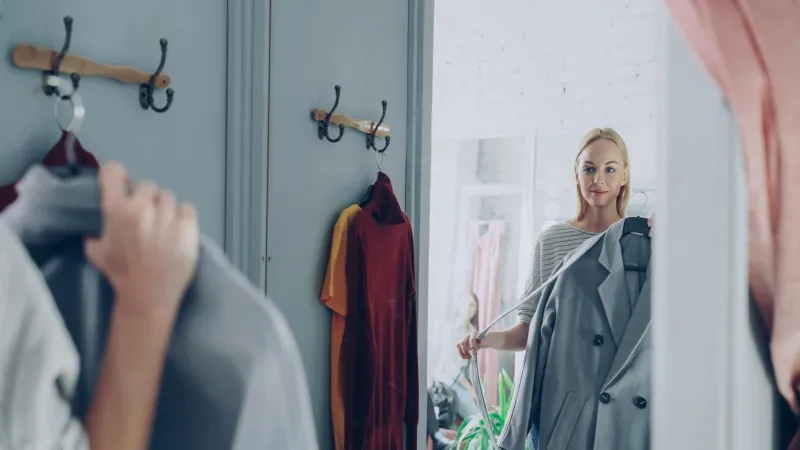
Photo by Photo by Anita Austvika on Unsplash on Unsplash
We've all been there. It's 11 p.m., you're scrolling in bed, and suddenly there's a $64 linen jumpsuit in your cart that you did not know existed four minutes ago. The sale ends at midnight. The site says only two are left. Your thumb hovers over 'Place Order.'
Here's the thing nobody selling you that jumpsuit wants you to know: the decision was already made before you consciously made it. You just need a way to catch it in the act.
The Five-Second Rule That Actually Works
Not the Mel Robbins one — this one's simpler. When you're about to check out, stop. Count five seconds. Ask one question: would I buy this at full price, right now, if nobody was watching?
That's it. That's the whole trick.
Behavioral researchers call the mechanism behind impulse purchases 'hot-state decision making' — when emotion runs the show, our prefrontal cortex (the rational, budget-loving part of the brain) basically takes a coffee break. Countdown timers, flash sales, and 'someone in Ohio just bought this' pop-ups are all engineered to keep you in that hot state. A deliberate pause is you manually rebooting the cold, calculating version of yourself.
Five seconds sounds trivial, but it's enough time for the dopamine spike of finding something to fade and for your actual judgment to log back on. Studies on purchase delays consistently show that even short waiting periods dramatically reduce impulse conversions — which is exactly why one-click ordering is worth billions to e-commerce companies.
When to Skip the Pause Entirely
Look, not every purchase deserves an interrogation. If you're replacing your worn-out running shoes or restocking your go-to white tees, you already did the math months ago. Run the checkout. Guilt-free.
The pause matters most in two scenarios:
Trend pieces. That leopard-print puffer is everywhere on your feed this week. Will it be everywhere next winter? If the answer requires more than five seconds of thought, the answer is no.
Sale-driven purchases. If the discount is the reason you want the item — not the item itself — you're not saving money. You're spending it at a discount. A 40%-off thing you never wear costs 100% of what you paid.
Make It a Habit, Not a Hassle
The easiest way to operationalize this: leave things in your cart overnight. Most cart-abandonment emails will even hand you a discount code the next day, which is a nice little bonus for doing the responsible thing. If you still want the item after 24 hours, it was probably never an impulse buy in the first place.
The five-second gut check won't make you a minimalist, and it shouldn't. It'll just make sure everything in your closet got there because you actually wanted it — not because a countdown timer told you to hurry.
Style Delivered. Life Elevated. And occasionally, order canceled.