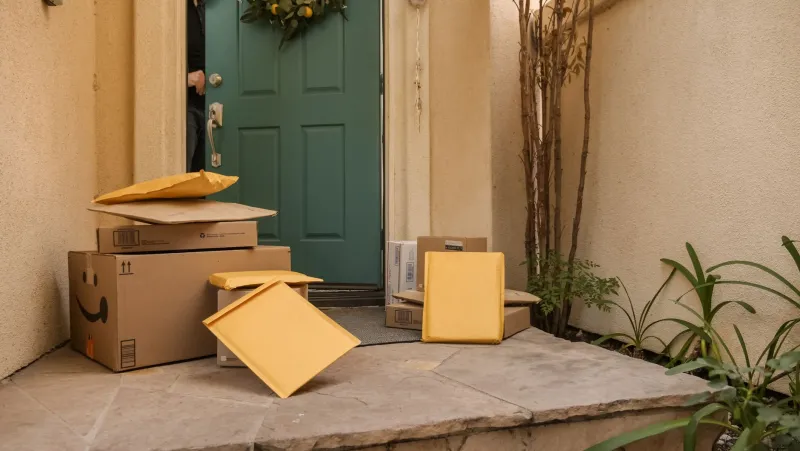
From Porch to Locker: A Practical Playbook for Packages That Don’t Vanish
Online shopping has a way of making the whole transaction feel finished the second you hit “place order.” The confirmation email arrives, the tracking number starts moving, and then the real world intervenes. A driver leaves a box in the rain. A delivery window collapses into a four-hour maybe. A package that was supposed to be on the porch is suddenly not on the porch, and you’re left staring at a ring camera clip like it’s a crime documentary.
The doorstep is the weakest link in the e-commerce chain. That doesn’t mean you have to accept it. With a few deliberate habits and a little setup, you can make deliveries more predictable, less exposed, and far easier to resolve when something goes sideways.
The porch is a bad default
Most packages are still delivered the old-fashioned way: dropped near the front door, sometimes with a knock, often without one. That works fine when you’re home, the weather is mild, and your street is quiet. It works less fine when you’re at work, a storm rolls through, or a passerby decides your new sneakers look better in their trunk.
A porch is convenient for the carrier and convenient for you only if you’re there to receive the package. The rest of the time, it’s an open-air storage unit with no lock and no receipt. Treat it that way.
The first fix is simple: stop treating “front door” as your only delivery address. Most carriers and retailers now offer alternatives that are boring in the best way — lockers, access points, hold-for-pickup, and workplace delivery. They’re not glamorous, but they remove the porch from the equation.
Pickup points are not a downgrade
If you live in an apartment, work odd hours, or have had packages go missing before, a pickup point is often the most reliable option. UPS Access Points, FedEx Office locations, Amazon Hub Lockers, and similar services let a carrier drop your package at a staffed or secured location. You get a notification, you show ID or a pickup code, and you leave with the box.
The trade-off is a small errand. The benefit is that your package isn’t sitting in public view for six hours. For high-value orders — electronics, gifts, anything with a limited return window — that trade is usually worth it.
USPS also offers hold-for-pickup and package intercept options in many cases, though availability depends on the service and the shipment. The point is to check the carrier’s options before the package is out for delivery, not after you’ve already started refreshing the tracking page.
Make your delivery instructions do actual work
Delivery instructions are not a magic spell. A driver with 180 stops is not going to memorize your novel about the side gate. But concise, useful notes can help. “Leave at side door, not front porch” is better than “please be careful with this package.” “Gate code 4412, second building” is better than “call me.”
If your building has a package room, use it. If your office accepts personal packages, ask before you ship. If you have a trusted neighbor who is home during the day, a quick text can turn their porch into a backup receiving dock. None of this is high-tech. It’s just routing around the weakest part of the system.
Porch-proofing, without turning your house into a fortress
You don’t need a drawbridge. You need layers. A doorbell camera can document what happened, and a motion-activated light can make a porch less appealing after dark. A lockable package box or a delivery locker can work for smaller items. A bench or planter with a hidden compartment is better than nothing, though it’s not security — it’s concealment.
Weather is the other porch pirate. A plastic bin with a lid, a covered alcove, or a delivery box that keeps rain off the cardboard can save a book, a pair of shoes, or a return you were about to ship back. If a storm is coming and you have a delivery scheduled, redirect it to a pickup point. That’s not paranoia. That’s basic logistics.
When a package disappears
First, slow down. Most “missing” packages are misdelivered, still on the truck, or sitting with a neighbor. Check the tracking details, look around the property, ask anyone else in the household, and check with nearby neighbors. Give it 24 to 48 hours before you assume the worst — carriers sometimes scan a package as delivered before it actually reaches the door.
If it’s still gone, contact the carrier and open a claim or trace. Then contact the retailer. In the US, the seller is usually your best ally because they have a business relationship with the carrier and may replace or refund the order. If the retailer won’t help and you paid by credit card, your card issuer’s dispute process is a backstop, not a first move. For obvious theft, a police report may be required by some carriers or insurers, so keep photos and any camera footage.
The larger lesson is to stop relying on hope as a delivery strategy. Choose a handoff method that matches your actual life. If you’re not home, don’t ask your porch to do your job. Send the package somewhere it can be received, scanned, and signed for — or at least somewhere it won’t be visible from the sidewalk.
Convenience is supposed to mean less friction, not more detective work. A smarter delivery setup is one of the cheapest upgrades you can make to your online shopping routine. The click is easy. The handoff is where you earn the peace of mind.